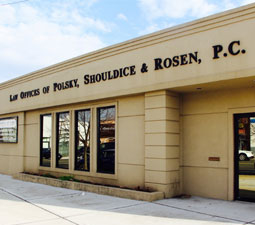

Trusted construction accident lawyers with more than three decades of New York workers' compensation experience.
If you've been injured at a construction site in Brooklyn, the workers' compensation process can feel slow, complicated, and stacked against you. Adjusters question medical records, carriers delay payments, and hearings get pushed back.
Our firm has focused on workers' compensation law since 1987, and we've represented injured Brooklyn workers across the borough and beyond. We handle hearings, appeals, and complex claims involving permanent impairment. Contact our office for a free consultation with a Brooklyn, NY construction accident lawyer that workers in the borough have relied on for more than three decades.
Construction Accident Lawyer Brooklyn, NY
What does workers' compensation provide after a Brooklyn construction accident?
New York's workers' compensation system covers nearly every work-related construction injury regardless of who was at fault. Falls from scaffolds, struck-by incidents on busy job sites, equipment malfunctions, and exposure-related illnesses all qualify for benefits when the injury arose from work activity. Available compensation includes medical care, partial wage replacement during periods of disability, and additional benefits for permanent impairment.
Brooklyn construction sites range from townhouse renovations to subway expansions to high-rise developments. The hazards vary, but the underlying legal framework stays the same. Our firm handles Brooklyn workers' comp cases for laborers, tradespeople, and supervisors hurt anywhere in the borough.
Types of Construction Accident Cases We Handle in Brooklyn
Brooklyn construction work covers everything from townhouse renovations to high-rise developments and major transit projects. The risks differ depending on the job site, but most serious construction injuries fall into a familiar set of common causes. The job injury case types below reflect what we see regularly in Brooklyn.
- Scaffold and ladder falls. Falls from elevated work surfaces continue to be one of the leading causes of serious construction injuries in New York. Workers suffer fractures, spinal injuries, and traumatic brain injuries that can keep them off the job for months or years.
- Falling debris and tool drops. On crowded job sites, dropped materials and tools striking workers below can cause severe head, neck, and shoulder injuries. Proper netting and hard-hat zones reduce risk but don't eliminate it.
- Crane and hoist accidents. Crane collapses, dropped loads, and hoist malfunctions injure operators, riggers, and ground crews. These cases often involve complex equipment investigations.
- Trench and excavation collapses. Soil walls that fail without warning can bury workers, leading to crush injuries, suffocation, and fatalities. Our firm has handled claims involving cave-ins across the New York metro area.
- Electrocution and arc flash injuries. Live electrical contact and arc flash incidents can produce serious burns, cardiac events, and long-term neurological damage. Electricians, demolition crews, and laborers near energized systems all face risk.
- Heavy equipment incidents. Workers struck by or pulled into excavators, bulldozers, forklifts, and skid steers can suffer crush injuries and amputations. Operator error and missing safeguards often play a role.
- Power tool injuries. Saws, nail guns, grinders, and pneumatic tools cause lacerations, eye injuries, and amputations every day on Brooklyn job sites. Many of these injuries qualify for workers' compensation even when worker error contributed.
- Repetitive stress injuries. Years of lifting, bending, and overhead work can produce rotator cuff tears, herniated discs, carpal tunnel syndrome, and other chronic conditions. We've handled these claims for long-tenured tradespeople across the city.
- Toxic exposure and respiratory illness. Workers exposed to silica dust, asbestos, lead, solvents, or welding fumes can develop lung disease and other chronic illnesses tied to their work history.
- Vehicle accidents on the job. Construction supervisors, delivery drivers, and tradespeople driving between sites face the risk of motor vehicle accidents that qualify as work injuries under New York law.
Why Choose Polsky, Shouldice & Rosen, P.C. for Construction Accidents in Brooklyn, NY?
Workers' compensation is the only kind of law our firm has practiced for more than 30 years. That depth shows up in the way we develop medical records, prepare clients for hearings, and push back on carriers that try to minimize or deny benefits.
Three Partners Focused Entirely on Injured Workers
Our three partners have collectively spent close to a century practicing workers' compensation law in New York. Mark Polsky has been practicing since 1987 after earning his J.D. from Hofstra Law School in 1986. He serves as President of the Nassau County Bar Association Workers' Compensation Committee. Donald Shouldice joined the New York bar in 1992 and serves on the Board of Directors of the Workers' Compensation Alliance, where he focuses on legislative advocacy for injured workers. Adam Rosen became a partner at the firm in 2000, is admitted to practice in both New York and Maryland, and chairs the Nassau County Bar Association Workers' Compensation Committee.
Hearing-Tested Representation
Construction claims often involve disputes over the cause of injury, the extent of impairment, and the worker's ability to return to the trade. Our workers compensation lawyer in Brooklyn, NY has handled hundreds of hearings and trials across New York and developed approaches that hold up against carrier defenses. We have handled Brooklyn injury claims for decades, in construction and across other industries.
Understanding Construction Accident Cases
Benefits, Liability, and Compensation in Construction Accident Cases
Construction accident cases in New York typically run through the workers' compensation system. The system is no-fault, which means an injured worker doesn't need to prove the employer did anything wrong to receive benefits. The trade-off is that workers' compensation generally limits the kinds of damages available compared to a personal injury lawsuit. Key benefit categories include the following.
- Medical care covers all reasonable and necessary treatment for the work injury.
- Lost wage benefits replace a portion of average weekly earnings up to a statutory maximum set by state law.
- Schedule loss of use awards provide compensation for permanent partial impairment to body parts like arms, hands, legs, and feet.
- Classification awards cover non-schedule permanent disability involving the back, head, or systemic conditions.
- Death benefits go to surviving spouses, dependent children, and certain other dependents.
- Vocational rehabilitation benefits may be available for workers who cannot return to their prior trade.
A separate negligence claim may exist alongside the workers' compensation case in certain situations. Property owners, general contractors, and equipment manufacturers can sometimes share legal responsibility for a construction injury under New York law. We focus on the workers' compensation side and coordinate with other counsel when pursuing additional compensation is part of the strategy.
What Are Important Aspects of a Construction Accident Case?
Strong claims usually share a few features in common. Prompt reporting, consistent medical care, and a clear connection between the accident and the resulting symptoms all play a role.
- Tell your supervisor about the injury as soon as it happens, and follow up in writing.
- Seek medical attention from a provider authorized by the New York Workers' Compensation Board.
- Hold onto every piece of paperwork from your employer, the carrier, and your doctors.
- Track each missed day of work and each medical appointment in a personal log.
- Be careful about giving recorded statements to the carrier before you talk with an attorney.
- Talk to a workers' compensation attorney before signing any settlement documents from the carrier.
What Is the Construction Accident Case Timeline?
Construction accident claims move through several predictable stages, though the speed of each step varies. A typical case follows this rough sequence:
- The injured worker receives initial medical care and reports the injury to the employer.
- The C-3 claim form is filed with the Workers' Compensation Board within the statutory deadline.
- The carrier either accepts the claim or files a notice of controversy contesting it.
- Both sides exchange medical reports and may conduct depositions of treating physicians.
- A Workers' Compensation Law Judge holds hearings to address indemnity benefits, treatment, and permanency.
Many claims resolve within a year. Cases involving surgery, significant permanent injury, or appeals can extend the claim process well beyond that timeframe. Some matters are resolved through lump-sum settlements that close out future benefits in exchange for an upfront payment.
What Should You Bring to Your Construction Accident Consultation?
The first meeting works best when you bring the documents that support what happened. Items that help us evaluate your situation quickly include the following:
- Any incident reports or written notice you submitted to your employer
- Hospital records, treatment notes, and prescriptions from after the injury
- Pay stubs and any short-term disability paperwork you've received
- Letters and emails from the insurance carrier or its representatives
During the initial consultation, we'll discuss your situation, walk through how the workers' compensation system applies to your case, and outline what to expect next. There is no obligation to retain the firm after the meeting.
What Are Important New York Legal Resources for Construction Accident Cases?
Several New York statutes and agencies shape how workers' compensation claims play out for construction injuries. The resources below offer a starting point for understanding the framework that applies.
- The Workers' Compensation Board administers all workers' compensation claims and oversees hearings, benefit schedules, and appeals.
- Under Workers' Compensation Law §28, the statute of limitations for filing a claim is generally two years from the date of accident, with separate timing rules for occupational diseases.
- The OSHA construction page covers federal workplace safety standards that apply to job sites across the country.
- BLS injury statistics report data on fatal and non-fatal injuries across construction and other industries.
These resources offer general information only. The application of any specific rule depends on the facts of your individual case.
Reach Out to Polsky, Shouldice & Rosen, P.C. to Schedule a Consultation
If you were hurt at a construction site anywhere in Brooklyn, talking with a workers' compensation attorney early gives you the best chance of avoiding mistakes that can cost you benefits. Our firm offers free initial consultations and represents injured workers throughout New York. Contact us to schedule a time to discuss your case with one of our attorneys.