

Getting hurt at work sets off a process most employees have never thought about before it happens to them. New York's workers' compensation system is designed to get benefits to injured workers quickly, without requiring them to prove their employer did anything wrong. But the system has rules, deadlines, and real pitfalls that affect what you receive if you don't navigate them carefully.
What the System Actually Is
Workers' compensation is a no-fault insurance system. You don't need to prove negligence. You need to show you were injured in the course of your employment. In exchange for that lower burden, workers' comp is generally the exclusive remedy against your employer, meaning you can't sue them directly for negligence in most circumstances.
That tradeoff matters. Benefits are capped and defined by statute. A personal injury lawsuit against a negligent third party could produce a larger recovery, but workers' comp provides faster, more predictable access to medical coverage and wage replacement while you're out of work.
Who Is Covered
Most employees in New York are covered from day one. Full-time, part-time, it doesn't matter. Coverage applies regardless of how long you've worked there or how many hours you log. Domestic workers, farm workers, and certain other categories have specific rules that differ from standard coverage.
Independent contractors aren't covered, which is exactly why some employers misclassify workers. If you've been told you're an independent contractor but your working relationship looks a lot more like employment, that classification is worth examining with a Queens workplace injury lawyer at Polsky, Shouldice & Rosen, P.C.
What Benefits You Can Actually Receive
Medical benefits cover all reasonable and necessary treatment related to your work injury. No copays, no deductibles. Treatment must come from a provider authorized by the Workers' Compensation Board, so staying in that network matters from the start.
Temporary disability benefits replace a portion of lost wages while you're unable to work or working reduced hours. Temporary total disability pays two-thirds of your average weekly wage up to a state-mandated maximum. Temporary partial disability applies when you can work but at reduced capacity.
Permanent disability benefits apply when your injury causes lasting impairment. The amount and duration depend on your impairment rating. Permanent total disability provides ongoing benefits when you can't return to any work at all.
Vocational rehabilitation helps workers who can't return to their prior job transition into new employment through retraining and job placement support.
Death benefits provide wage replacement to surviving dependents when a worker is killed on the job, plus funeral expense coverage up to a statutory limit.
The Reporting and Filing Process
Timing matters. You must report your injury to your employer within 30 days of the accident, or within 30 days of discovering that an illness is work-related. Miss that window and you risk losing your claim entirely.
After reporting to your employer, you file directly with the New York Workers' Compensation Board using Form C-3. The Board oversees the process, and disputed cases go before Workers' Compensation Law Judges.
Your employer's insurance carrier investigates the claim and either accepts or controverts it. A controverted claim means the insurer is disputing your entitlement to benefits, which triggers a hearing process. Don't assume a denial is the end of the road.
What Can Go Wrong
Claims get denied for all kinds of reasons. The employer may argue the injury didn't happen at work. The insurer may dispute severity or challenge whether your treatment is necessary. Independent medical examinations ordered by the insurer sometimes produce opinions that contradict your own doctor's findings, which is both frustrating and common.
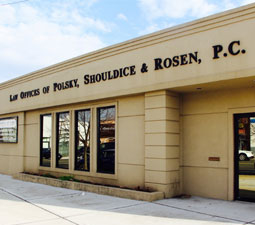
Polsky, Shouldice & Rosen, P.C. represents injured workers throughout Queens and the surrounding areas, helping clients navigate disputed claims, appear before the Workers' Compensation Board, and pursue every benefit category they're entitled to receive.
When Workers' Comp Isn't Your Only Option
Sometimes a third party beyond your employer contributed to the accident. A contractor on a construction site. An equipment manufacturer whose product was defective. A driver who caused a vehicle accident during work hours. In those situations, you may be able to pursue a personal injury claim against that third party alongside your workers' comp claim.
That combination can significantly increase total recovery because third-party claims aren't subject to the same caps that limit workers' compensation benefits.
If you were hurt at work and want to understand the full picture, talking to a Queens workplace injury lawyer gives you a realistic view of what workers' comp provides and whether additional claims are worth pursuing.