
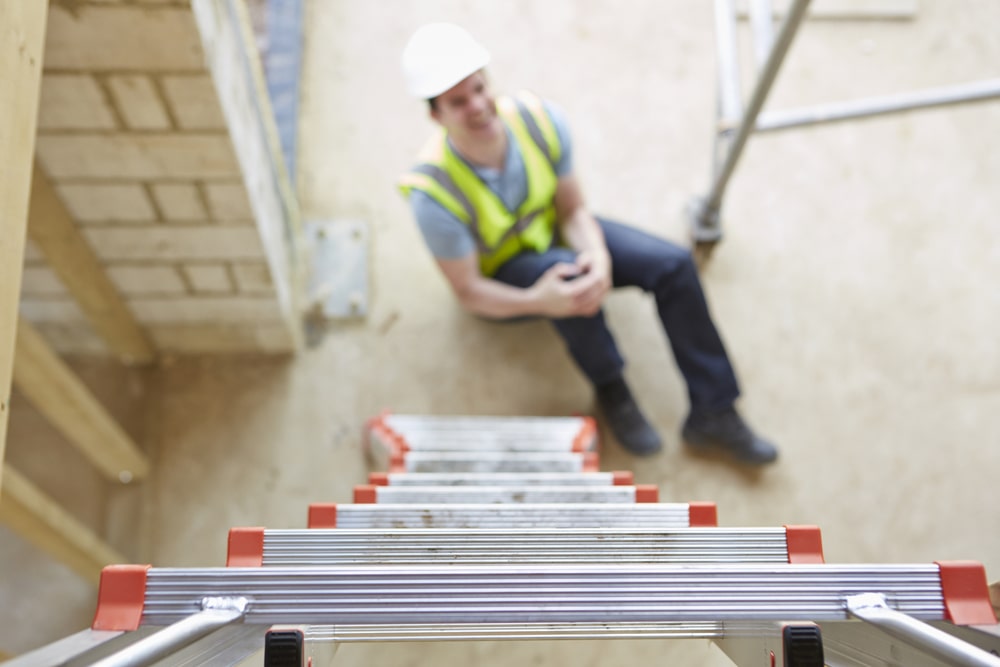
Enacted in 1885, New York Labor Law Section 240 requires property owners, general contractors, and their agents to provide proper safety equipment to workers performing tasks at elevated heights. Known as the Scaffold Law, it imposes absolute liability on these parties for gravity-related injuries, meaning a violation of the statute makes them liable regardless of whether the worker also made a mistake that contributed to the fall.
This law predates the entire workers' compensation system, having been written specifically to address the unique dangers construction workers face when working at height, well before any other injury compensation framework existed in New York.
A Long Island construction accident lawyer evaluates every fall or falling-object case for a potential Scaffold Law claim first, since this statute can support a far larger recovery than a standard workers' compensation claim alone provides.
What Kinds of Accidents This Law Actually Covers
The law reaches far beyond falls off a traditional scaffold structure. It covers falls from ladders, falls through unprotected floor or roof openings, and injuries caused by materials or tools falling from above due to inadequate securing devices. New York is the only state that applies this level of absolute liability specifically to elevation-related construction accidents.
The law generally does not cover injuries to pedestrians or motorists struck by falling objects, nor does it typically apply to purely routine maintenance work rather than construction, demolition, repair, or alteration activities. Determining which category a specific task falls into sometimes requires a careful look at exactly what the worker was doing at the moment of the accident.
Whether the Worker's Own Negligence Reduces Recovery
Generally, no. Once a worker establishes that a Scaffold Law violation occurred and caused the injury, the responsible parties cannot reduce the recovery by arguing the worker was also careless, such as using a ladder incorrectly or failing to follow a safety instruction. This stands in sharp contrast to most personal injury cases, where a plaintiff's own conduct can reduce or eliminate recovery entirely.
Courts have applied this standard broadly across many trades, including ironworkers, electricians, plumbers, painters, and general laborers, as long as the injury involved a genuine elevation-related hazard covered by the statute.
Why a Scaffold Law Claim Does Not Replace Workers' Compensation
No. A worker can pursue both a workers' compensation claim through their employer and a separate Labor Law 240 lawsuit against the property owner or general contractor, since these are entirely different legal remedies addressing different responsible parties. Receiving workers' compensation benefits does not eliminate the right to also pursue a Scaffold Law claim.
This dual-track exposure often surprises property owners and general contractors, some of whom assume that a workers' compensation policy fully protects them from further liability after a construction accident.
Evidence That Supports a Scaffold Law Claim
Building a strong Labor Law 240 case depends on documenting exactly what safety equipment was, or was not, provided at the time of the accident. Useful evidence typically includes:
- Photos of the ladder, scaffold, or other equipment involved in the fall
- Witness statements describing the condition of the safety equipment
- Site safety records and inspection reports
- Medical records documenting the injuries sustained
- Photos of the accident scene showing the elevation and surrounding conditions
How Polsky, Shouldice & Rosen, P.C. Builds These Cases
Scaffold Law cases require documenting the specific safety equipment failure that led to a fall, not simply the fact that an accident occurred. Polsky, Shouldice & Rosen, P.C. investigates every angle of a construction accident to identify every available claim, including this powerful statute.
Your Next Step
Understanding whether New York's Scaffold Law applies to your accident can significantly affect the total value of your case. If you were hurt in a fall on a Long Island construction site, a Long Island construction accident lawyer can review the facts and help you understand every claim available to you.