

Loud machinery can damage hearing slowly, with no single moment that feels like an accident. New York’s workers’ compensation law still recognizes that damage as a work injury, and it sets its own timing rules. Workers in factories, plants, and other industrial settings should know how those rules differ from the ones for a sudden injury.
Hearing Loss Can Be a Compensable Work Injury
New York treats occupational hearing loss through a dedicated set of provisions in the Workers’ Compensation Law. Under section 49-bb, the date of disablement is the last day of the removal or separation period, and the disablement is treated as an accident under the law. That framing lets a gradual injury move through the same claims system as a sudden one.
A worker with occupational hearing loss may have no date on which anything dramatic happened, and the statute accounts for that by tying the claim to the end of the exposure. Workers who spent years near presses, compressors, or grinders may not be able to point to a single day.
Compensation Becomes Payable After a Waiting Period
Compensation for hearing loss becomes payable, at the employee’s option, three months after one of two events. The first is the employee’s removal from harmful noise exposure at work. The second is separation from the last employer where the employee was exposed to harmful noise.
The statute also says the three-month period can be met by using effective ear protection that the employer provides at its expense. Reviewing a worker’s job history to see which exposure date applies is where a Long Island industrial accident lawyer can help, since a person who moved between employers or departments may have more than one candidate.
The Filing Window Runs From Discovery
A hearing loss claim isn’t barred merely because it wasn’t filed within the usual two-year period for accident claims, as long as it’s filed within 90 days after the employee learns the loss is or was due to the employment. That’s a short window. It also starts from when the worker knows the cause, not from the first time a ringing sound or muffled speech appeared.
Because the clock depends on what the worker knew and when, an audiology report or a doctor’s note linking the loss to workplace noise can fix the date that starts it. General filing deadlines for other injuries work differently, so a worker shouldn’t assume the same dates apply.
OSHA Sets Noise Limits for Employers
Federal rules put obligations on employers before any claim arises. Under 29 CFR 1910.95, the permissible limit for an eight-hour day is 90 decibels, and a hearing conservation program applies when exposure reaches an eight-hour average of 85 decibels. That program includes:
- Noise monitoring to identify affected employees
- Audiometric testing provided at no cost to employees
- Hearing protectors provided at no cost and worn as required
- Annual training on noise effects and protector use
Those requirements generate records, including exposure measurements and hearing tests, and a Long Island workers compensation lawyer can seek them from the employer as part of a claim. They can help show what a worker was exposed to over time. A worker who never received a hearing test or protectors can still raise that fact, though the absence of a program doesn’t by itself decide a claim.
Workplace Records and Reporting Support the Claim
Hearing loss is one of several occupational diseases with their own proof needs, so a worker can help the claim by gathering information early. Useful items include:
- A list of jobs, machines, and areas where the noise was heard
- Any hearing tests from before and after the job
- Names of coworkers who were exposed to the same noise
- Dates the worker noticed changes in hearing
Timing matters here, so a worker who suspects work-related hearing loss should start by reporting the injury to the employer without delay. A late report can create avoidable disputes later.
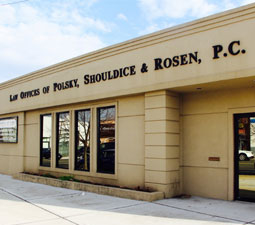
Partner Mark Polsky of Polsky, Shouldice & Rosen, P.C. has practiced since 1987 and regularly meets with local unions to educate workers on their rights. We represent injured workers only, and all three of our partners handle every area of workers’ compensation.
A short filing window and a three-month waiting period make hearing loss claims easy to mistime, so the dates are worth confirming early. A worker with ringing, muffled hearing, or a diagnosis after years in a noisy plant is welcome to reach out to us, and we’ll confirm which dates apply before the window closes.